Mae Capone is one of the most searched names connected to the personal life of Al Capone, the famous American gangster of the Prohibition era. Although Al Capone’s name is linked with crime, power, Chicago gangs, illegal alcohol, tax evasion, and federal imprisonment, Mae Capone’s story is very different. She lived close to one of the most notorious men in American history, yet she stayed mostly away from public attention. Her life was not built around fame, interviews, or public statements. Instead, she became known as a wife, mother, caretaker, and private woman who carried the weight of the Capone name for many decades.
Mae Capone was born Mary Josephine Coughlin on April 11, 1897, in Brooklyn, New York. She was of Irish descent and came from a Catholic family. She later married Alphonse Gabriel Capone, better known as Al Capone, on December 30, 1918. Their marriage lasted until Al Capone’s death in 1947. The couple had one son, Albert Francis Capone, commonly known as Sonny Capone. Mae Capone lived a long life and died on April 16, 1986, in Hollywood, Florida, at the age of 89.
The life of Mae Capone is often discussed through related searches such as Mae Capone biography, Mae Capone age, Mae Capone death, Mae Capone cause of death, Mae Capone son, Mae Capone children, Mae Capone net worth, Mae Capone family, Mae Capone ethnicity, Mary Josephine Coughlin, Al Capone wife, Al Capone and Mae Capone, and Mae Capone grave. Many people search for her because they want to understand the woman behind the most famous gangster in American history. However, Mae Capone’s life should not be treated only as an extension of Al Capone’s criminal story. She had her own background, family identity, struggles, responsibilities, and private experiences.
Mae Capone’s Real Name and Early Background
Mae Capone’s real name was Mary Josephine Coughlin. The name “Mae” became the name by which she was widely known after her marriage to Al Capone. She was born in Brooklyn, New York, during a period when immigrant families were shaping the social and cultural life of American cities. Brooklyn at that time had large Irish, Italian, Jewish, and other immigrant communities. These communities often lived in close neighbourhoods, maintained strong family traditions, and relied heavily on religious and ethnic networks.
Mae came from an Irish Catholic background. Her parents, Michael Coughlin and Bridget Gorman, were connected to Irish immigrant roots. This background is important because Mae’s marriage to Al Capone brought together two different immigrant identities. Mae was Irish American, while Al Capone was Italian American. In early twentieth-century America, ethnic identity mattered deeply. Families often expected their children to marry within their own cultural or religious community. Mae’s marriage to Al Capone therefore crossed a social line that may have been noticed by both families and neighbourhood circles.
Mae was often described as more refined and stable than Al Capone in their younger years. While Al left school early and became involved in street life, Mae’s upbringing was more traditional. She was raised in a Catholic environment where family respectability and religious values were important. This difference between their backgrounds is one reason their relationship has attracted historical interest. Mae did not come from the same criminal environment that later made Al Capone famous. Her early life was closer to the world of ordinary immigrant families trying to build a respectable future in New York.
Mae Capone’s Ethnicity and Nationality
Mae Capone’s ethnicity was Irish American. Her family roots were Irish, and she was raised in an Irish Catholic household. This detail is often searched because many readers know Al Capone as an Italian American gangster and want to understand the background of his wife. Mae’s Irish identity was part of who she was before she became connected to the Capone name.
Mae Capone’s nationality was American because she was born in Brooklyn, New York. She belonged to the generation of American-born children of immigrant families. Her life shows how immigrant identities shaped personal relationships in early twentieth-century America. While she was American by birth, her family culture remained strongly tied to Irish Catholic traditions. This mix of American nationality and Irish heritage was common among families living in New York’s immigrant neighbourhoods.
Her Catholic background also mattered in her personal life. Marriage, motherhood, family duty, and loyalty were important values in the world she came from. These values may help explain why Mae stayed with Al Capone through years of scandal, imprisonment, illness, and public disgrace. Her life cannot be reduced only to loyalty, but family responsibility clearly played a major role in her decisions.
How Mae Capone Met Al Capone
The exact details of how Mae Capone met Al Capone are not fully certain. Different accounts give different versions of their first meeting. Some suggest they met through social circles in Brooklyn, while others say they may have met at a party or through neighbourhood connections. Because Mae herself did not leave behind a detailed public account of her private life, the full story remains partly unclear.
What is known is that Mae and Al were young when their relationship began. Mae was about two years older than Al Capone. This age difference has often been mentioned in biographies because their marriage records reportedly adjusted their ages to make them appear closer in age. In 1918, social expectations around marriage, age, religion, and family reputation were strong, so such details mattered more than they might today.
Mae met Al before he became the world-famous crime boss associated with Chicago. At that time, he was not yet the national symbol of organised crime. He was a young man from Brooklyn who had already been exposed to street gangs and criminal influences, but his future fame had not yet fully developed. Mae’s relationship with him therefore began before the full force of the Capone legend existed.
Mae Capone and Al Capone’s Marriage
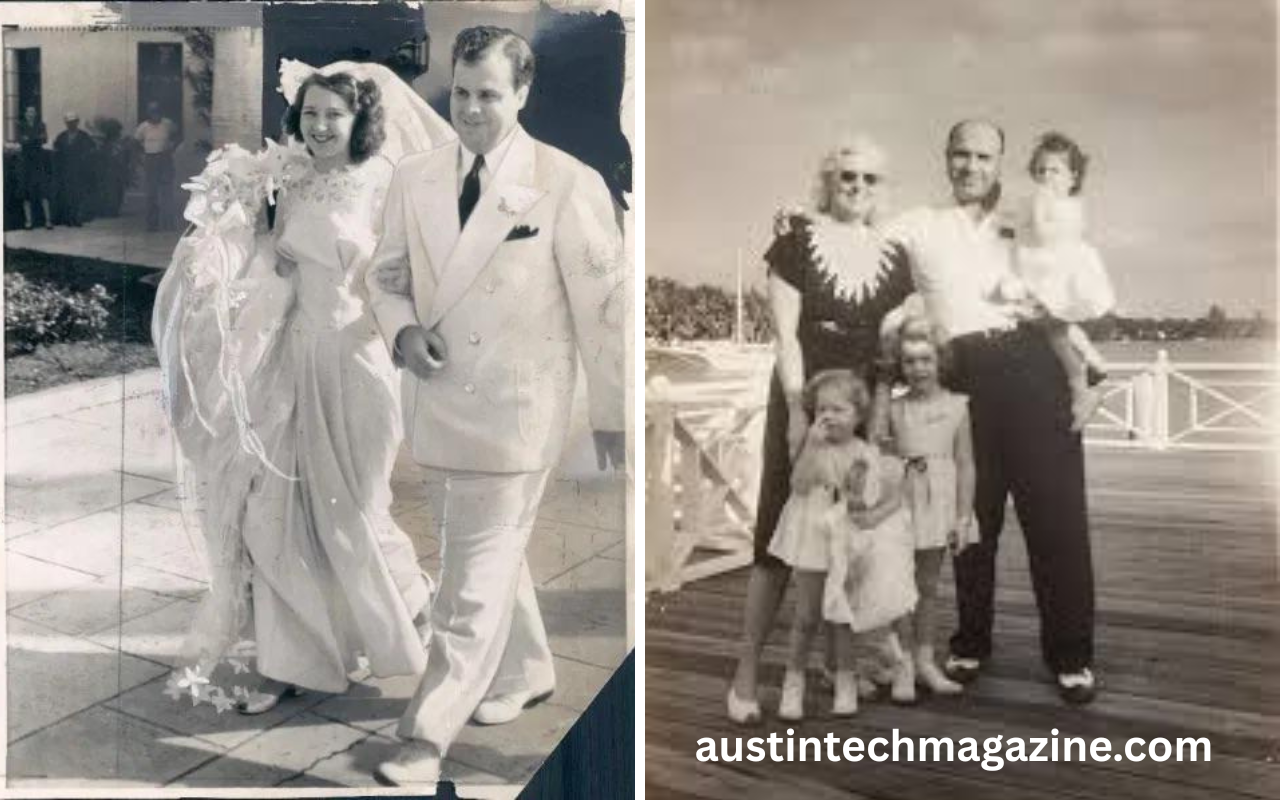
Mae Capone married Al Capone on December 30, 1918. Their marriage took place shortly after the birth of their son, Albert Francis Capone, who became known as Sonny. The timing of their marriage has often been discussed because Sonny was born before the wedding ceremony. In the social and religious environment of that period, having a child before marriage could create shame or pressure for a family. Mae and Al’s marriage helped formalise their family life and gave their son the Capone name within marriage.
Their marriage lasted for almost thirty years, from 1918 until Al Capone’s death in 1947. During that time, Mae saw Al rise from a young man with street connections to one of the most feared and famous gangsters in America. She also saw him fall from power after his federal tax conviction, imprisonment, and severe health decline. Their marriage was not an ordinary marriage. It existed under the pressure of crime, publicity, law enforcement, danger, wealth, illness, and public judgement.
Mae’s role in the marriage was largely private. She did not become a public speaker, political figure, or celebrity in her own right. She was not known as an active participant in Al Capone’s criminal operations. Instead, she was seen as the woman who stayed beside him, raised their son, visited him during imprisonment, and cared for him during his final years. Her marriage to Al Capone was therefore a mixture of personal loyalty, family duty, emotional burden, and public pressure.
Mae Capone as Al Capone’s Wife
Being Al Capone’s wife meant living with both privilege and danger. During the peak of Al Capone’s power in the 1920s, the family had access to money, homes, social comfort, and material luxury. Al Capone’s illegal empire generated huge income through bootlegging, gambling, and other criminal activities. Mae lived in the domestic world supported by that money, but the source of the wealth also created constant risk.
Al Capone’s public image was built around fear and authority. Newspapers called him a gangster, crime boss, and public enemy. Federal agencies watched him. Rival gangs threatened him. Politicians and police were connected to his world through corruption and pressure. Mae, as his wife, could not avoid the effects of this environment. Even if she remained personally private, the public reputation of her husband shaped her own life.
Mae’s experience shows the difficult position of wives connected to infamous men. She received the benefits of wealth but also carried the burden of shame and fear. She may not have controlled Al’s actions, but she lived with the consequences. Her life as Al Capone’s wife was therefore not simply glamorous. It was also stressful, uncertain, and emotionally heavy.
Mae Capone’s Son, Albert Francis “Sonny” Capone
Mae Capone and Al Capone had one child, Albert Francis Capone, known as Sonny Capone. He was born in December 1918 and became the centre of Mae’s family life. Sonny’s birth came shortly before Mae and Al’s marriage, and he remained their only child. Many people search for Mae Capone children, but the answer is simple: Mae Capone had one son.
Sonny Capone had health challenges from childhood, especially hearing-related problems. Different accounts connect his health issues to serious childhood illness and family medical concerns. Because some claims about his health are sensitive and not always clearly proven in public records, they should be treated carefully. What is clear is that Sonny’s wellbeing mattered deeply to Mae and Al. As parents, they sought medical help for him and tried to give him a stable life despite the chaos surrounding the Capone name.
Sonny later distanced himself from his father’s criminal legacy. He eventually used the name Albert Brown, a change that reflected his desire for a quieter life. This decision shows how difficult it was to live as Al Capone’s son. The Capone name carried fame, but it also carried suspicion, judgement, and unwanted attention. For Mae, protecting Sonny from that burden was likely one of her most important responsibilities.
Mae Capone as a Mother
Mae Capone’s identity as a mother is central to her biography. While Al Capone’s story is usually told through crime, violence, money, and prison, Mae’s daily life was shaped by motherhood. She had to raise Sonny in a family name that attracted headlines, police attention, and public curiosity. This was not an easy environment for a child.
As Sonny grew up, he had to face the reality that his father was one of the most famous criminals in America. Mae had to manage that emotional burden within the family. She likely had to create some sense of normal life while the outside world treated the Capone family as a subject of scandal and fascination. This required strength, privacy, and emotional control.
Mae’s motherhood also continued after Al Capone’s death. She and Sonny later became involved in efforts to protect the family’s privacy and reputation. Their connection to the Capone name did not end when Al died. Public interest continued through books, films, television, and journalism. Mae’s role as a mother therefore included protecting her son from a legacy that never fully disappeared.
Life During Al Capone’s Chicago Years
Al Capone became most famous during his years in Chicago. The Prohibition era created the conditions for organised crime to grow rapidly. Alcohol was illegal, but public demand remained high. Criminal groups made large profits by producing, transporting, and selling illegal liquor. Al Capone rose within this world and became one of its most powerful figures.
Mae Capone lived beside this rise, but she did not live it publicly in the same way. She was not known for appearing in gang meetings or managing criminal business. Her world was more domestic, but that domestic world was still connected to Al’s public empire. The money, houses, guards, attention, and danger all came from the same source.
Chicago during the Capone years was marked by gang rivalry, political corruption, public fear, and sensational media coverage. The newspapers followed Al Capone closely. His name became known across America. Mae had to live in a household where public attention was constant and where danger was never far away. This made her private life deeply unusual, even when she tried to remain outside the public spotlight.
Was Mae Capone Involved in Crime?
There is no strong evidence that Mae Capone was directly involved in Al Capone’s criminal organisation. She is remembered as Al Capone’s wife, not as a gangster or criminal operator. Some online articles exaggerate the role of gangster wives, but Mae’s documented public image does not support the idea that she ran criminal activities.
This point is important because many people assume that anyone close to a famous criminal must have been involved in crime. In Mae’s case, the better view is that she lived with the effects of Al Capone’s criminal life but was not known as a direct participant. She benefited from the wealth created by his illegal operations, but that is different from proving that she personally planned or managed those operations.
Mae Capone’s story should therefore be handled with balance. She should not be falsely presented as innocent of all knowledge of her husband’s world, because it would have been difficult not to understand at least some of what was happening. At the same time, she should not be invented as a crime figure without evidence. Her life was connected to crime through marriage, not through a documented criminal career of her own.
Mae Capone and Public Attention
Mae Capone lived under public attention because of her husband’s fame, but she did not appear to enjoy publicity. She was not a woman who built an identity through newspapers, interviews, or public performance. Her public image remained quiet and controlled. This silence has made her mysterious to modern readers.
The lack of direct statements from Mae creates a challenge for anyone writing her biography. Much of what is known about her comes through records connected to Al Capone, family history, public documents, and later accounts. Because she did not tell her own story in a major public memoir, writers often describe her through the events around her.
This silence may have been a form of protection. Public attention around the Capone name could be harsh and invasive. Newspapers and later entertainment media often turned the family into part of a crime legend. For Mae, privacy may have been the only way to maintain dignity and protect her son.
Al Capone’s Tax Case and Mae Capone’s Family Life
Al Capone’s downfall came through federal tax charges rather than a direct conviction for the violent crimes often associated with his name. In 1931, he was convicted of tax evasion and sentenced to federal prison. This changed Mae Capone’s life dramatically. She went from being the wife of a powerful crime boss to the wife of a convicted prisoner.
The conviction brought shame, separation, and uncertainty. Mae had to manage family life while Al was imprisoned. The wealth and power that once surrounded the Capone name could not prevent the federal government from taking action. For Mae and Sonny, Al’s imprisonment meant public disgrace as well as private pain.
Al Capone served time in different federal institutions, including Alcatraz. Prison removed him from his family and weakened his control over the life he once led. Mae remained connected to him during this period. Her loyalty during his imprisonment became part of her image as a devoted wife, though that devotion also placed her in a painful position.
Mae Capone’s Visits to Al Capone in Prison
Mae Capone reportedly visited Al during his imprisonment and maintained contact with him. These visits were emotionally significant because they showed that Mae did not abandon him after his conviction. Visiting a husband in prison was not only difficult personally but also socially humiliating, especially when the prisoner was one of the most famous criminals in the country.
Alcatraz was especially difficult because it was isolated and heavily controlled. A visit there was not a simple family meeting. It required travel, procedures, waiting, and emotional strength. For Mae, each visit reminded her of the distance between the powerful man Al had once been and the prisoner he had become.
These prison years also changed the emotional balance of the marriage. Al was no longer the dominant public figure he had been in Chicago. He was confined, monitored, and declining in health. Mae’s role became more connected to emotional support and family continuity. Her loyalty during this period is one of the reasons she is often remembered as a devoted wife.
Al Capone’s Illness and Mae Capone’s Caregiving Role
Al Capone suffered from serious health problems, including complications connected to syphilis. His condition worsened during and after imprisonment. By the time he was released in 1939, he was no longer the powerful figure who had once controlled much of Chicago’s underworld. His health decline affected his mind, body, and ability to live independently.
Mae Capone became part of his care during his final years. This stage of her life is very important because it shows a different side of the Capone story. The public often remembers Al Capone as a feared gangster, but Mae’s later experience was not about fear or power. It was about illness, decline, and caregiving.
Caring for a seriously ill spouse can be emotionally exhausting. Mae had already lived through scandal, danger, imprisonment, and public judgement. In Al’s final years, she also had to live with the slow decline of the man she had married. This was a private burden, and it deserves more attention than it often receives in gangster stories.
Mae Capone and the Florida Years
The Capone family’s Florida home became one of the most famous places connected to Al Capone’s later life. Al had purchased a property on Palm Island in Miami Beach in 1928. After his release from prison, he spent much of his final period there. Mae also lived through these Florida years, which were quieter than the Chicago years but still connected to public curiosity.
Florida offered distance from Chicago and the violent world of Prohibition-era gang conflict. However, it did not erase the Capone name. The family remained famous, and the home became part of the legend. Even when Al was ill and inactive, people still viewed him through the image of the crime boss he had once been.
For Mae, the Florida years were likely a mix of privacy, caregiving, and emotional exhaustion. She had survived the peak of Al’s fame, his conviction, and his imprisonment. Now she was living with his decline. These years show how long the consequences of public notoriety can last inside a family.
Al Capone’s Death and Mae Capone’s Widowhood
Al Capone died on January 25, 1947, in Florida. His death ended one chapter of Mae Capone’s life but did not end public interest in the family. Mae became a widow after nearly thirty years of marriage. By the time Al died, he was far removed from the power and danger of his earlier years.
Mae’s widowhood lasted for almost four decades. This long period is important because it shows that Mae Capone’s life did not end with Al Capone’s death. She continued living as Mary Josephine Capone, carrying the family name and protecting her privacy. She did not try to become famous because of her husband’s past. She did not publicly turn herself into a celebrity widow.
Instead, Mae remained quiet. Her later life was marked by privacy, family concerns, and distance from the media. This choice says a great deal about her personality. She had lived with enough attention during Al’s lifetime. After his death, she seemed to prefer silence over publicity.
Mae Capone and the Privacy of the Capone Family
Mae Capone’s later life shows how strongly she valued privacy. The Capone family remained a subject of books, television programmes, films, and public discussion. The name had become part of American crime history. Even decades after Al’s death, people continued to use the Capone story for entertainment.
Mae and her son Sonny were connected to legal action involving portrayals of Al Capone and the family name. This reflected a larger concern about privacy, reputation, and the emotional effect of public entertainment on surviving family members. To the public, Al Capone was a historical figure. To Mae and Sonny, he was husband and father.
This difference matters. Popular culture often treats famous criminals as characters, but families experience those portrayals personally. Mae’s concern for privacy shows that she did not want the family name used carelessly. She understood that the Capone story was public history, but she also knew that it had private consequences.
Mae Capone’s Death
Mae Capone died on April 16, 1986, in Hollywood, Florida. She was 89 years old. Her death came nearly forty years after Al Capone’s death and many decades after the height of the Prohibition era. By the time she died, Al Capone had already become a fixed figure in American popular culture.
Many people search for Mae Capone cause of death. The most responsible answer is that her exact medical cause of death is not always clearly stated in widely available public sources. What is consistently known is her date of death, place of death, and age. She died in Florida at the age of 89.
Mae’s long life is remarkable because she lived through several very different historical periods. She was born in the 1890s, married during World War I, lived through Prohibition, saw the Great Depression, experienced her husband’s imprisonment, became a widow after World War II, and lived into the modern media age of the 1980s. Her life stretched far beyond the years usually associated with Al Capone’s criminal career.
Mae Capone’s Grave and Final Resting Place
Mae Capone’s final resting place is another topic that attracts search interest. Some public memorial information describes her as having been cremated rather than buried in a traditional grave. This is why searches for Mae Capone grave can sometimes produce limited or confusing results.
The public interest in her grave reflects the continuing fascination with the Capone family. People often search for graves, houses, and photographs because they want a physical connection to famous historical names. In Mae’s case, her memory is less connected to a public monument and more connected to the story of her life as Al Capone’s wife and Sonny Capone’s mother.
Her final years and death also fit the pattern of her life. She did not leave behind a large public legacy of speeches, memoirs, or media appearances. Her memory remains quiet, private, and partly hidden behind the larger shadow of the Capone name.
Mae Capone’s Net Worth
Mae Capone net worth is a popular related keyword, but it is also one of the most uncertain topics connected to her biography. There is no reliable public record that gives a precise personal net worth for Mae Capone. Many websites mention figures, but those numbers are usually not supported by strong evidence.
During Al Capone’s most powerful years, the family lived with wealth. Al Capone earned huge amounts of money through illegal activities during Prohibition. The family had access to comfortable homes, luxury goods, and a lifestyle far beyond that of ordinary working families. However, criminal wealth was difficult to measure accurately. It was often hidden, spent, seized, lost, or moved through unofficial channels.
Mae Capone’s personal net worth should therefore be discussed carefully. It is fair to say that she lived with wealth during parts of her marriage, but it is not accurate to claim an exact figure without reliable financial records. Her later life was private, and there is no clear public documentation showing her personal fortune in a precise way.
Mae Capone Photos and Public Image
Mae Capone photos are often searched by people who want to see what Al Capone’s wife looked like. Surviving images usually show her as composed, elegant, and reserved. She appears very different from the dramatic public image associated with Al Capone. Where Al’s photographs often show confidence and notoriety, Mae’s images suggest privacy and restraint.
However, people should be careful with photos found online. Not every image labelled as Mae Capone is necessarily authentic. Some websites use old photographs without proper identification. Because Mae was not a major public celebrity in her own right, fewer verified images of her are widely available compared with Al Capone.
Her public image has been shaped by this limited visual record. She is often imagined as the quiet woman beside a dangerous man. While that image contains some truth, it can also oversimplify her. Mae was not only a wife in photographs. She was a person who lived through decades of family pressure, public judgement, motherhood, caregiving, and widowhood.
Mae Capone in Popular Culture
Mae Capone appears in popular culture mostly as a supporting figure in stories about Al Capone. Films, television dramas, documentaries, and books usually focus on Al’s criminal world. Mae is often shown as the wife at home, the mother of his child, or the woman who stays loyal while he faces prison and illness.
This limited role is common in stories about famous male criminals. Their wives are often presented in simple ways, either as loyal partners, silent victims, glamorous companions, or moral contrasts. Mae’s real life was likely more complex. She lived with Al’s wealth but also with his disgrace. She stayed with him but also had to protect herself and her son. She was close to history but did not control how that history was told.
Popular culture has kept the Capone name alive, but it has not always given Mae Capone a full human story. A more balanced view recognises her as a private woman caught inside one of America’s most public crime legends.
The Marriage of Mae and Al Capone
The marriage of Mae and Al Capone was complicated. It cannot be described only as a love story, nor only as a tragedy. Mae stayed with Al for almost thirty years, through some of the most difficult circumstances a marriage could face. She saw him become rich, feared, hunted, convicted, imprisoned, sick, and finally dependent.
Some accounts present Mae as deeply loyal to Al. That loyalty is clear in the fact that she remained with him during prison and illness. However, loyalty does not mean the relationship was easy or happy in a simple way. Al’s criminal life exposed the family to danger and shame. His illness created further emotional pain. His fame made privacy difficult.
Mae and Al Capone’s marriage therefore reflects a mixture of attachment, duty, pressure, family responsibility, and survival. Mae’s decision to stay with him may have come from love, religion, loyalty, social expectations, motherhood, or all of these together. The truth was probably not simple.
Mae Capone’s Personality and Private Strength
Mae Capone’s personality is difficult to describe with certainty because she did not leave behind many public statements. However, her actions suggest privacy, endurance, and family loyalty. She lived through extreme public pressure without turning herself into a public figure. She remained connected to her husband through prison and illness. She protected her son as much as possible from the burden of the Capone name.
This kind of private strength is often overlooked. History tends to focus on loud, powerful, and controversial figures. Mae was not loud in public. She did not command headlines in the same way her husband did. But her life required emotional endurance. Living with Al Capone’s reputation for decades was not easy.
Mae’s strength was not the kind associated with public speeches or political influence. It was the quieter strength of survival. She endured scandal, judgement, fear, illness, loss, and the long shadow of a famous name. That is why her story continues to interest readers.
Why People Still Search for Mae Capone
People still search for Mae Capone because she represents the hidden side of a famous criminal story. Al Capone’s life has been told many times through the lens of crime and power. Mae’s life invites a different question: what happens to the family members of infamous people?
Searches for Mae Capone biography, Mae Capone son, Mae Capone death, Mae Capone net worth, and Mae Capone family show that readers want more than the gangster legend. They want to know about the woman who lived inside the legend. They want to understand whether she was involved, how she lived, how she raised her son, and what happened to her after Al Capone died.
Mae Capone’s story remains interesting because it is quieter than Al’s but not less meaningful. Her life shows the private cost of public notoriety. It also shows how a person can be remembered mostly through someone else’s name and still have a story worth telling.
Mae Capone’s Legacy
Mae Capone’s legacy is not based on public achievement, politics, business, or entertainment. Her legacy is tied to family, survival, and the private side of American crime history. She is remembered because she was Al Capone’s wife, but her life also reveals the emotional impact of being connected to a notorious figure.
She lived with privilege, but also with fear. She had wealth, but also public shame. She was close to power, but not publicly powerful herself. She was married to a man who became a legend, but she remained a private woman. This contrast is what makes Mae Capone’s biography important.
Her legacy also belongs to the larger story of women whose lives are overshadowed by famous men. Mae Capone did not create the Capone empire, but she had to live with its consequences. Her son also had to carry that legacy. In that sense, Mae’s life helps readers understand that crime history is not only about criminals and law enforcement. It is also about families.
Conclusion
Mae Capone, born Mary Josephine Coughlin, lived a life shaped by one of the most famous and dangerous surnames in American history. She was born in Brooklyn in 1897, came from an Irish Catholic family, married Al Capone in 1918, gave birth to their only son Sonny, and remained with Al until his death in 1947. She later lived quietly and died in Florida in 1986 at the age of 89.
Her story is not the story of a gangster, but it is deeply connected to gangland history. She lived beside Al Capone’s rise, conviction, imprisonment, illness, and death. She experienced the comfort of wealth and the burden of public disgrace. She protected her family, valued privacy, and avoided turning her husband’s name into personal fame.
Mae Capone should be remembered with balance. She was not simply a glamorous gangster’s wife, and she was not a proven criminal figure. She was a woman who lived through a difficult marriage, raised a son under an infamous name, cared for a declining husband, and spent decades trying to remain private. Her life shows the human side of the Capone story and reminds readers that behind every public legend, there are private lives carrying the consequences.
you may also read :Shawna Loyer in Thir13en Ghosts